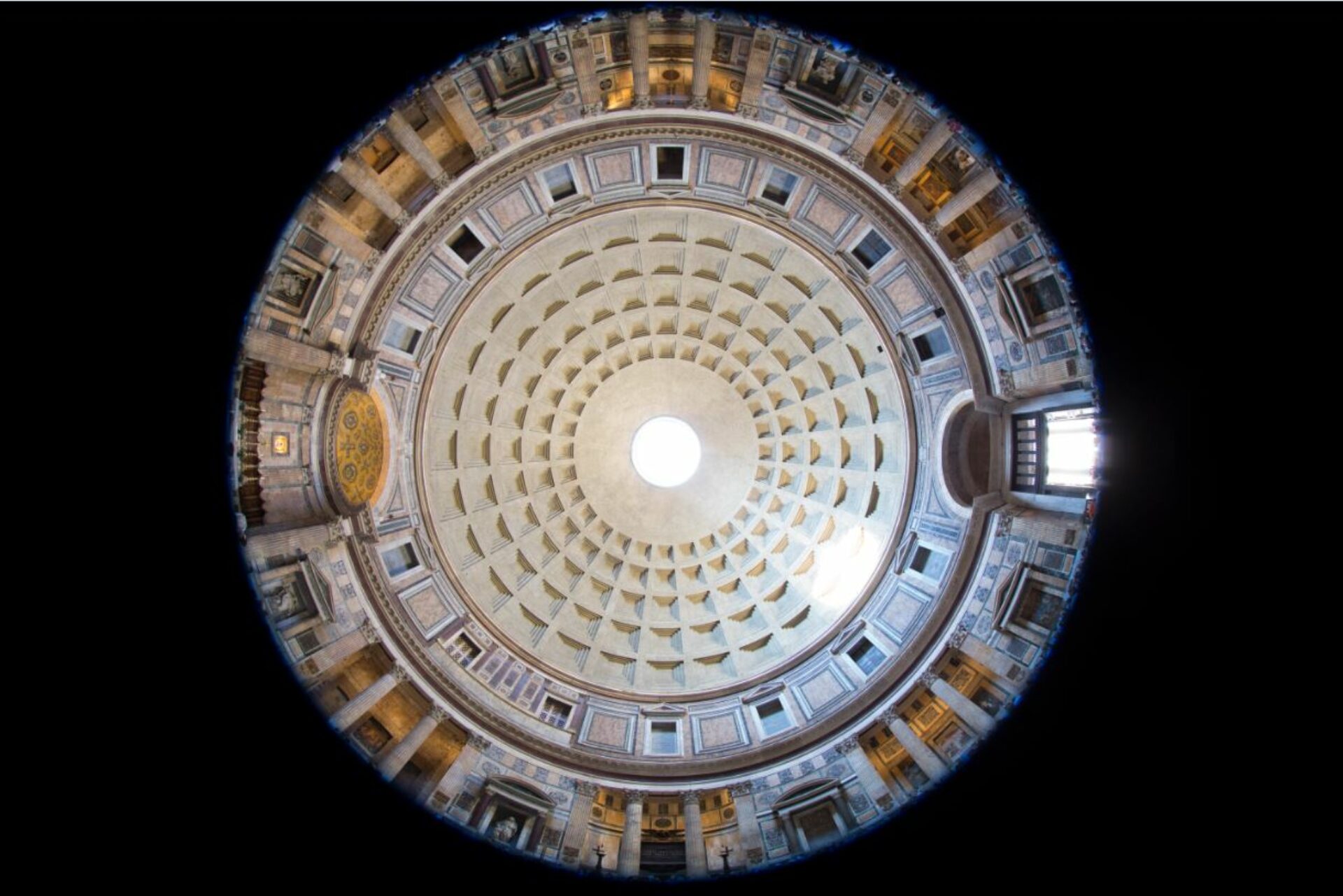
The Pantheon may well be the first building from classical architecture where the interior is deliberately made to outshine the exterior.
The circular part of the building or rotunda was entranced via two bronze doors measuring 12 x 7.5 m (those of today are ancient but not original). The rotunda measures 43.2 m in diameter which is exactly the maximum height of the dome, itself a perfect hemisphere.
At the very top of the dome is an opening to the sky (oculus) which is 8.8 m in diameter and has a decorative bronze sheet frieze. The dome is made from a light tufa and scoria (a type of pumice) mix of concrete (caementa) and its interior is further lightened by five rings of 28 coffers which reduce in size as they rise towards the centre of the dome. These may have been originally covered in bronze sheets.
A circular opening known as the oculus lets the only light in to the Pantheon. The oculus is about 30 feet across. The purpose of the oculus was not only to illuminate the interior but it was also built to let those in the temple contemplate the heavens. …
The Pantheon is the best preserved ancient building in Rome. It remains as an everlasting symbol of construction art and science; and forecasts the modern idea of sustainability.